Categories
BLOG - Risk For Competitive Advantage Uncategorized

Unilever Tackles Palm Oil Risks: Single Point of Opportunity Not Far Behind

Bravo!  The industry consumer good giant, Unilever, has decided enough is enough when it comes to socio-environmental, regulatory and economic risks throughout the palm oil supply chain (see you can’t outsource your responsibilities).    Unilever plans to release all of the details of its palm oil supply chain in order to ensure greater accountability for deforestation, animal and human rights abuse, greenhouse gas emissions, and financial inequities.

Palm Oil Risks

Source:  http://www.cifor.org/publications/pdf_files/brief/6670-RSPObriefsummary.pdf

According to a recent post in Metro UK (thank you Ashitha Nagesh),  “Marc Engel, Unilever’s chief supply chain officer, said the company hoped sharing the location of more than 1,400 mills and 300 direct suppliers of the oil would spark an industry-wide movement towards supply chain transparency”.

On the surface, the initial move will illuminate then address many of the previously described risks (as it did with those mining conflict minerals).   However, as consumer, regulatory and social pressure increase others will find it necessary to mimic Unilever’s actions. The investment community will be excited by this change since further disclosure will lead to a more precise, aggregate view of the consumer product industry value chain activities, participants, and key dependencies.  A revelation of this nature could reveal significant opportunities for the investment community including mergers, acquisitions, and industry consolidation (as well as bad behaviors).    Stay tuned!

AFTER THE ORIGINAL POST…

Came across this excellent article posted on Richard Branson’s Virgin site about the “real cost of illegally produced palm oil”.   Worth the read!


Categories
BLOG - Risk For Competitive Advantage Uncategorized

Supply Chain Risk and the need to understand the industry value chain before proceeding

Valentine’s Day Roses Hit Unexpected Snag: Trade Boom

Top flower exporter scrambled to line up cargo planes to ensure beautiful blooms would be available at florists around the world

Another example of the changing landscape of Supply Chain Risk activities.

A prerequisite to navigating supply chain risk and uncertainty: understand the industry value chain dynamics (forces), then understand your organization’s supply chain and 3rd party vulnerabilities.

#risk #uncertainty #supplychain #resilience #continuity #logistics #supplychainrisk #vendorrisk #management #leadership #transportation #agriculture

Categories
Events

Upcoming Keynote: Leveraging Risk for Competitive Advantage

Where:  Everbridge Summit    RESILIENCE: The Critical Event Management Summit, Orlando, Florida   February 27, 2018

Topic:  Leveraging Risk for Competitive Advantage (“Uncertainty Advantage)

Key Issues to be discussed

  • What is meant by “leveraging risk and resilience for competitive advantage”
  • What’s needed to leverage risk and resilience for competitive advantage?  What are some examples?
  • How do you get started?

I look forward to seeing you on the 27th!

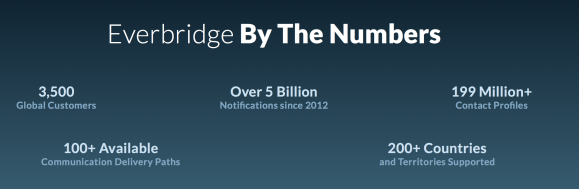
Everbridge Numbers

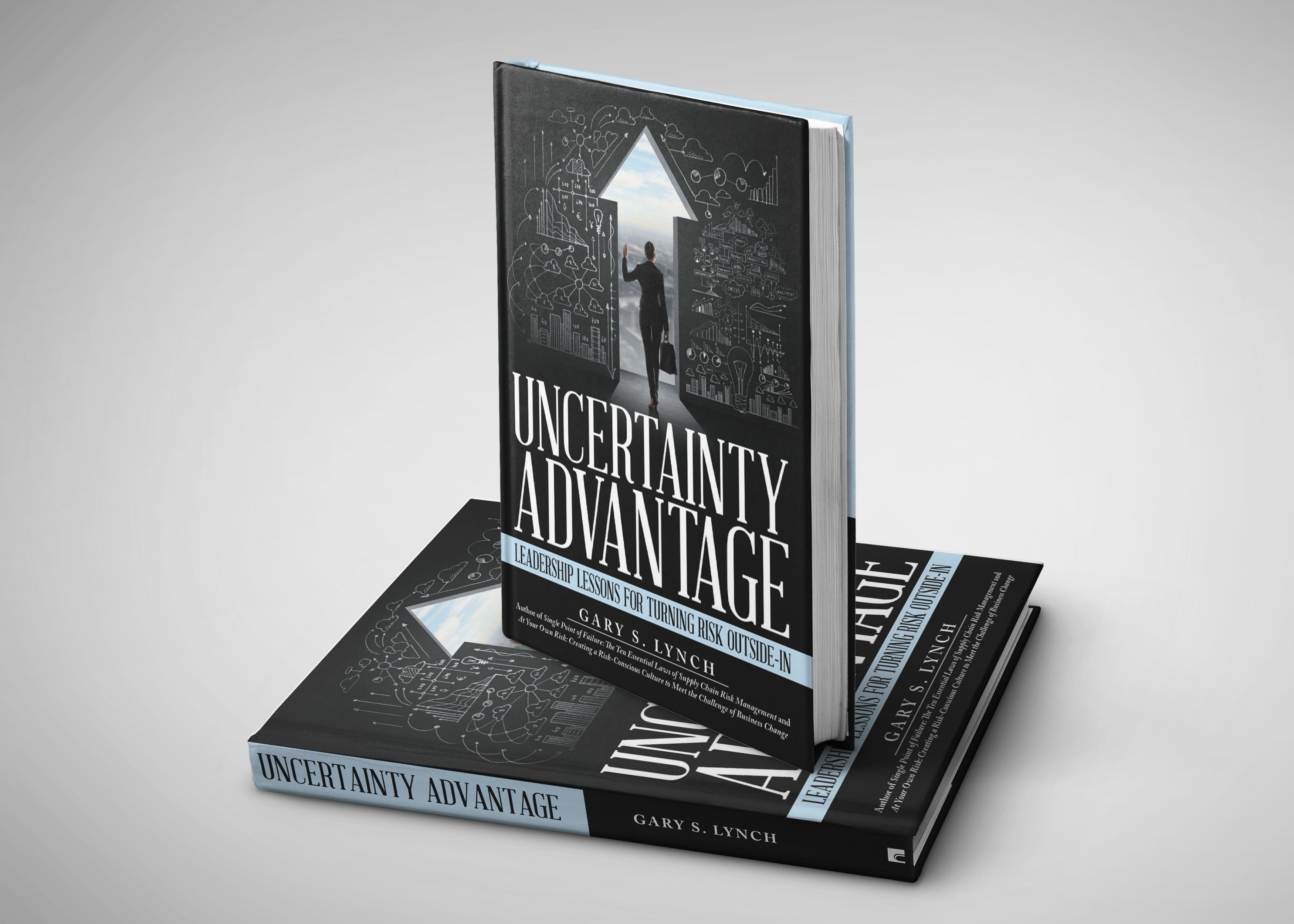
“UNCERTAINTY ADVANTAGE:  LEADERSHIP LESSONS IN TURNING RISK OUTSIDE-IN”

UA 3D Full Open


Categories
BLOG - Risk For Competitive Advantage Uncategorized

Uncertainty Advantage, a book about leveraging risk for competitive advantage, climbs to #4! Thank you!!

A very big THANK YOU for supporting my multi-year project!!  “Uncertainty Advantage:  Leadership Lessons for Turning Risk Outside-In” has been steadily climbing up the charts!  Please help me out by providing an Amazon review!!! #risk #riskmanagement #uncertainty #management #supplychain #resilience #RIMS #ISM #insurance #leadership #strategy


UA 3D 1 on 1 to Left 2


Categories
BLOG - Risk For Competitive Advantage

What should we worry about in 2018? The results are in and it’s everything but nothing!!

It’s that time of year again and the predictions are in for what’s ahead in 2018 – see below for the links.   Personally, I enjoy reading the various reports but making them relevant to a specific organization, product, process, function, person, etc. is quite a challenge.  Where’s the case for action?  On the surface, the half dozen or so risk reports reflect the reality of an organization’s challenges.   However, for most organizations, it’s difficult to determine the relevance of the event/threat/risk, the magnitude of the potential disruption and the circumstances that need to be in place for the risk to become fully realized.  It’s not that they are unable to make the connection.  It’s about competing priorities and the investment needed in time, management attention, resources, and capital or budget needed to understand uncertainty.  The list of questions is a long one; how do these risks influence or accelerate change in the industry’s value chain (and your product/service value proposition)?  How does the event or change impact profitability?

You might ask, isn’t the organization and it’s leaders already “all-in” on this topic?   Haven’t they made massive investment in people, process and technology to support massive ERM programs (enterprise risk management), risk registers, audits and third-party assessments, compliance reviews, and dozens of [fill in the blank] risk program (e.g. quality, business continuity, security, cybersecurity, environmental, health, safety, corporate responsibility, sustainability, insurance, records management, supply chain, and now…strategy risk).

Hold on for a minute!  Maybe the way risk is being viewed and managed and the methods for allocating resources is the greater exposure?  In today’s dynamic, information-rich and technology-driven world why can’t we immediately link a change, threat or event to the profitability, performance, and value of a particular product, product family or revenue stream?  Why does it take so long for the organization to understand (and respond) to potential economic, social, and jurisdictional consequences and opportunities?  We are a society that has commercialized complex technologies such as autonomous vehicles, robotics, and 3D printing so what’s the big deal?   Hmmm, maybe the lack of the business case for understanding uncertainty, risk and opportunity or exposure is the issue.  For many of us who have been dabbling in this topic for awhile, we acknowledge that there’s plenty of room to improve the mindset/behaviors and attitudes towards risk as well a need to greatly enhance competencies and capabilities in the context of business and social goals.

The good news, change is coming and it’s coming fast.  Stay tuned as we explore many of these changes through a practical and actionable lens.  I’d love to get your thoughts, come join the journey!  In the meantime, enjoy the read and of course, consider who’s presenting results!!  If you’ve seen one risk report, you’ve seen one risk report – it’s about who’s point of view.

“World Economic Forum Global Risks 2018”,  WEF Global Risk Network

“Top Risks 2018”, Eurasia Group

“The Top Global Risks for 2018”, Protiviti

“Allianz Risk Barometer 2018”, Allianz

“Top Risks 2018”, Atlantic Council

“Three Emerging Market Risks Companies Should Watch Out for in 2018”, HBRHarvard Business Review

“2018’s Most Dangerous Risks for Insurers”,  Willis Towers Watson

“These are the Top Ten Risks in 2018”, Time
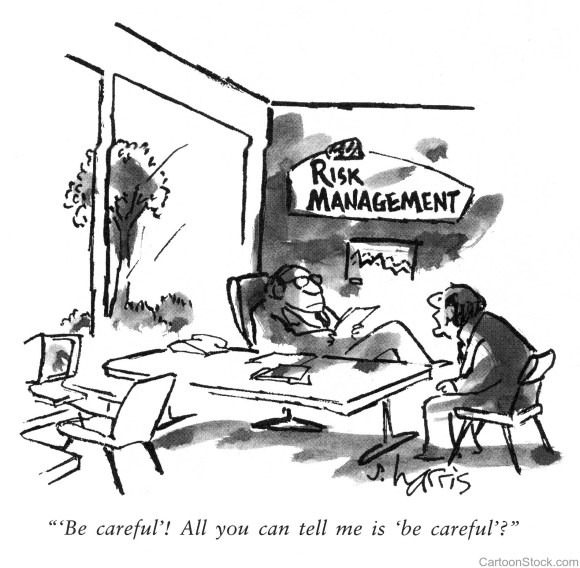
Be careful